Five classics, one 8-bit engine
WILD 8 started as an open world at NES resolution and became a diorama on a Quest. Underneath it there is now a real engine: tile map, cliffs, 3D view, save slots, dialogue, a map page, sound. So I copied it into its own folder to play with:
create a seperate world / story in a subfolder each, of course trying to re-use the engine if possible and not copying too much per subfolder.... so yes similar to the design playbook the idea is to make more and then remove what doesnt work and deepen what does
The first batch was four small worlds the agent invented. They worked, and they were
dull — the most basic levels with exactly ONE mechanic we already knew
. So I took
the inventing away from it:
let's have more fun with this. instead of asking for your creativity... let's just look at the top metacritic games and try to recreate them in wild-8-vr engine ... pick just one each turn so that it's not too much... these existing 4 you can pretty much scratch = delete
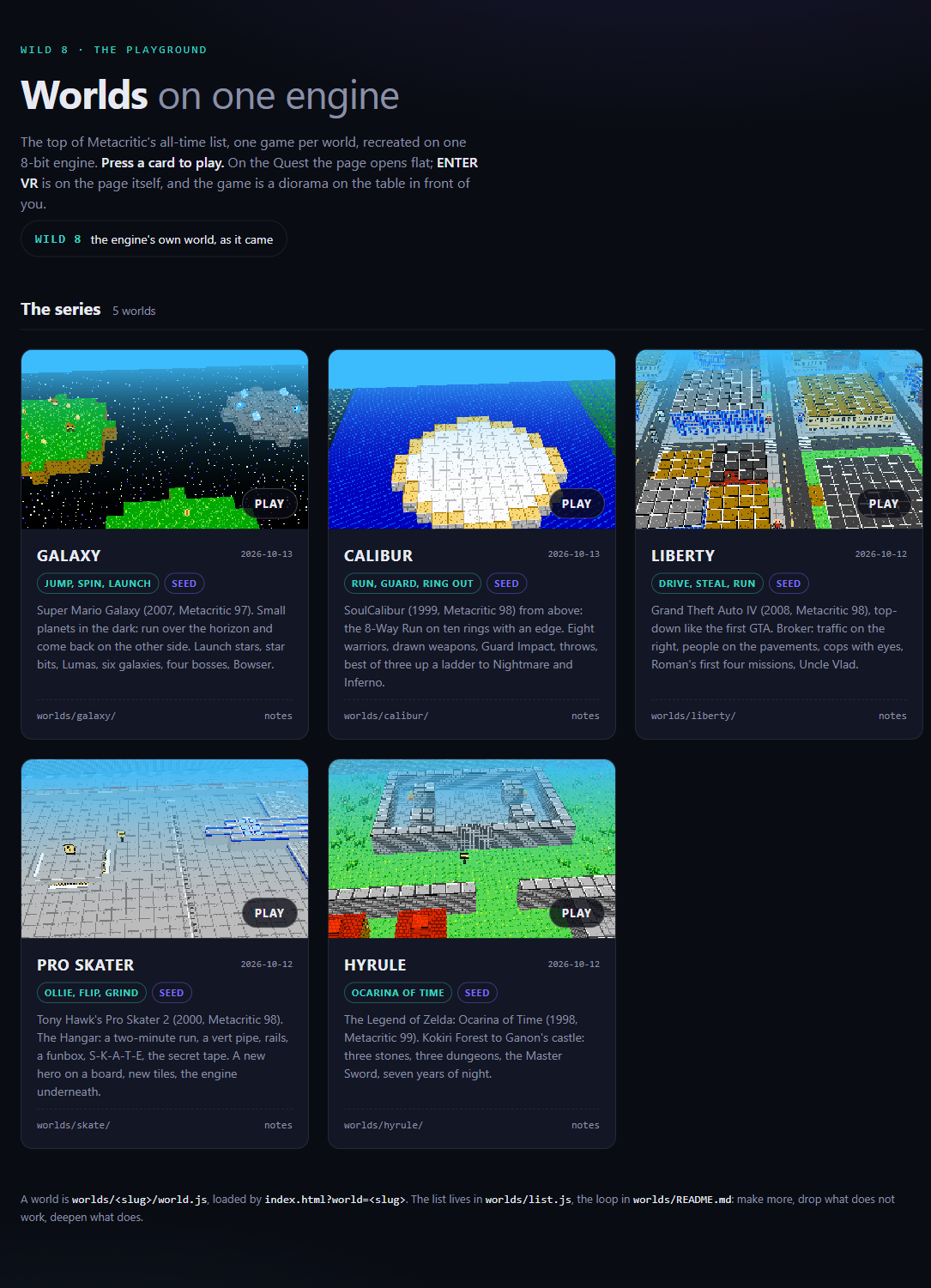
One game a turn
Hyrule came first, Ocarina of Time, Metacritic 99. It is the obvious one, since
the engine was already a Zelda-like, and that was the problem. My verdict was
ok I mean... it's ok
, and the note that shaped everything after it:
please don't take the existing world as canon. think engine vs world. YES you can add new textuers, YES you can add new enemies, NO you dont have to use all the existing stuff.. get it? stay in the engine but dont just re arrange the existing material
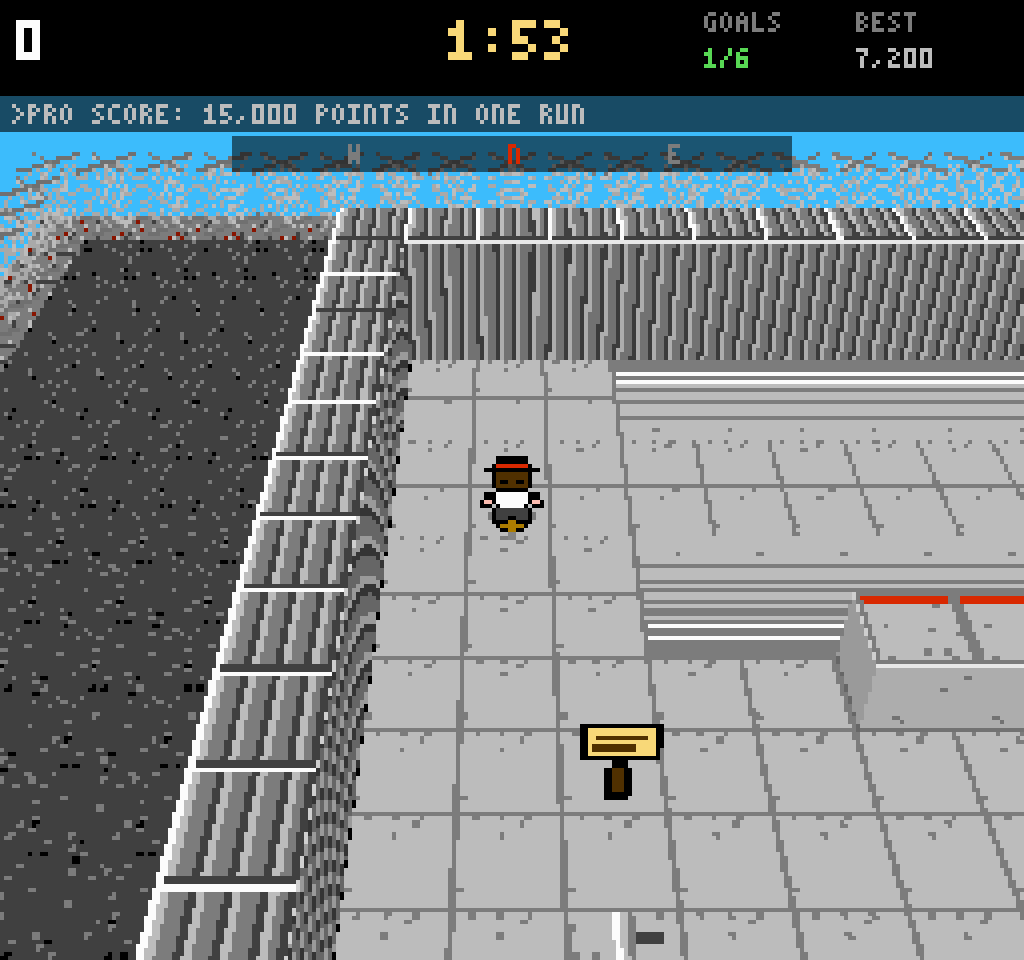
So the next one was not a Zelda at all. Pro Skater is Tony Hawk's Pro Skater 2's
Hangar: a two-minute run, a vert pipe, rails, S-K-A-T-E letters to collect and a secret
tape, with a new hero on a board and new tiles. The engine had to grow seams for that —
the hero's whole movement, his sprite and the top bar can now be swapped out by a world.
ok now this is funny haha it's not a great game but a cool idea.
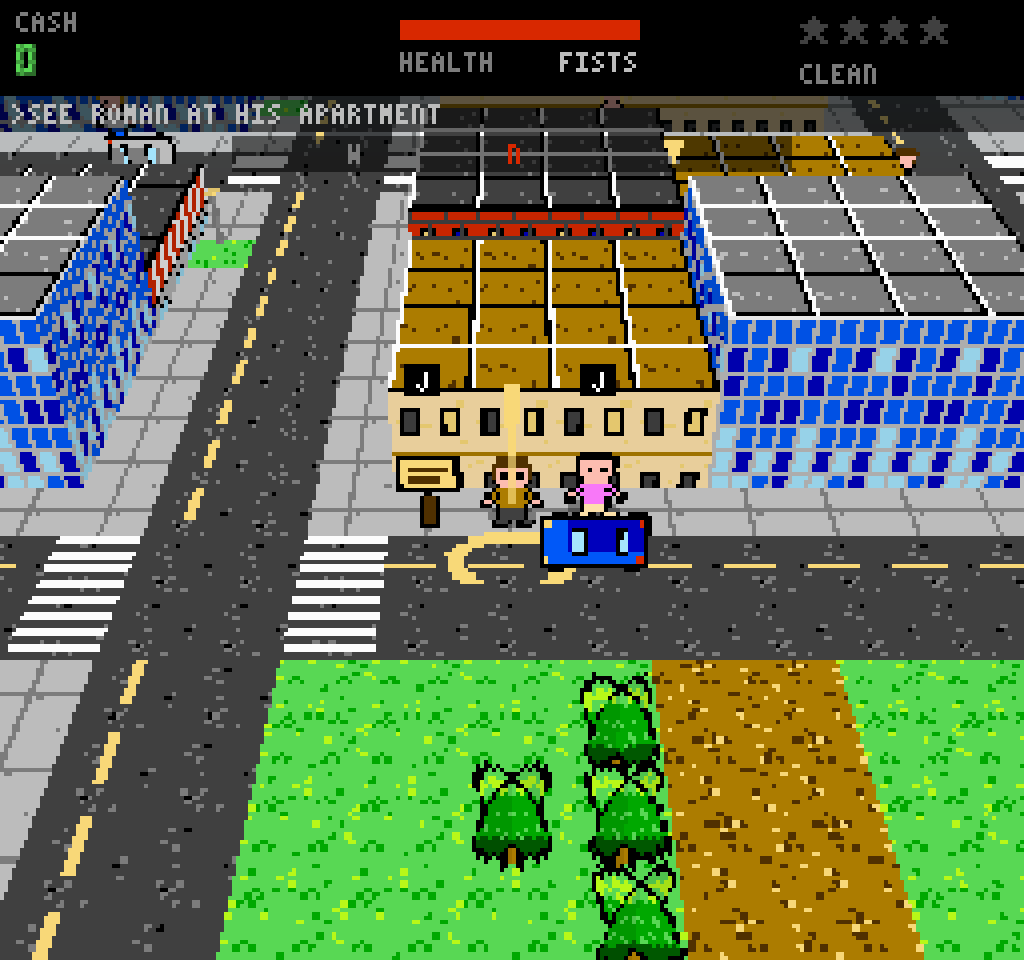
Liberty is Grand Theft Auto IV, seen from above the way the first GTA was:
traffic driving on the right, people on the pavements, cops who notice you, Roman's
first four missions. ok the GTA is actually pretty cool
.
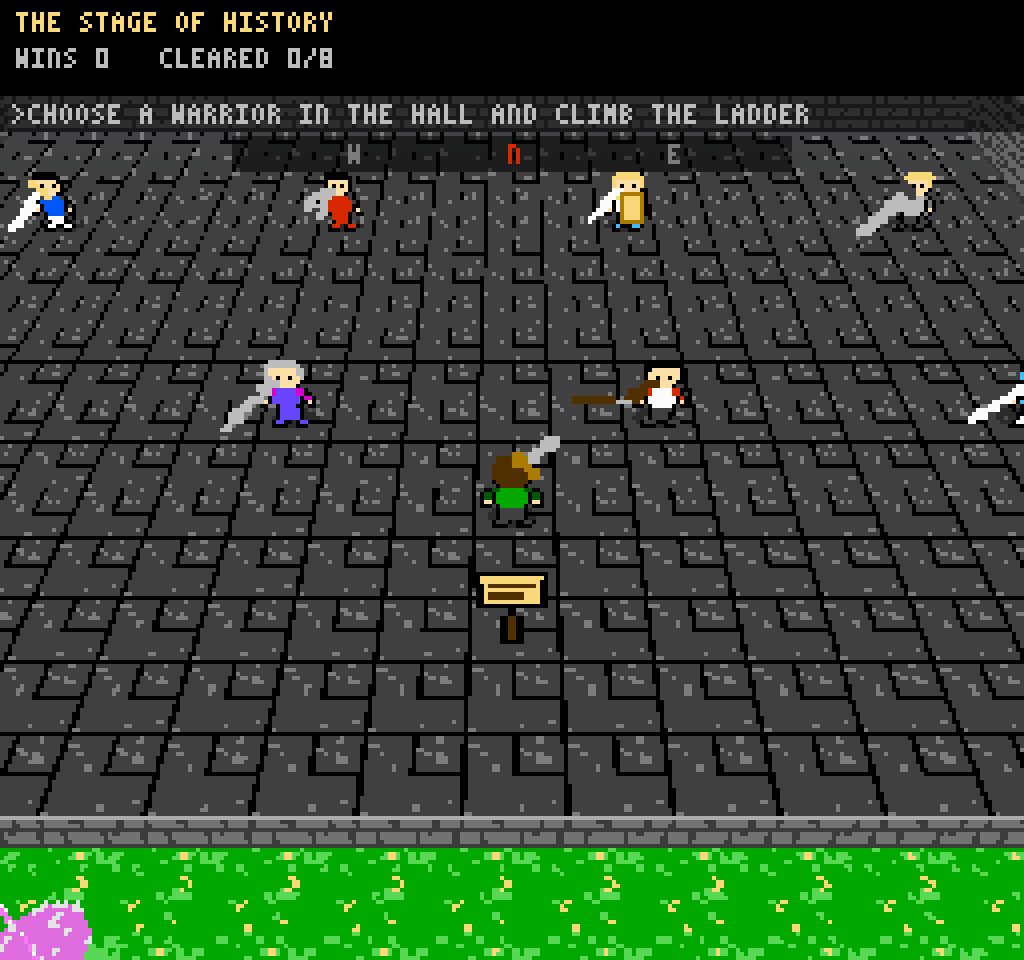
Calibur is SoulCalibur, also from above. The one idea of that game was the
8-Way Run — fighters circling freely on a ring with an edge — and seen from the top, the
notes say, that idea is the whole game. Ten rings over ten hazards, ten fighters with
weapons drawn in code, guard, Guard Impact, throws, ring outs, best of three up a ladder
to Nightmare and Inferno. It got the loudest verdict of the five: wow haha actually
great.
Galaxy is Super Mario Galaxy: small planets in the dark that you run over and come back round on the other side of, launch stars, star bits, Lumas, six galaxies, four bosses and Bowser.
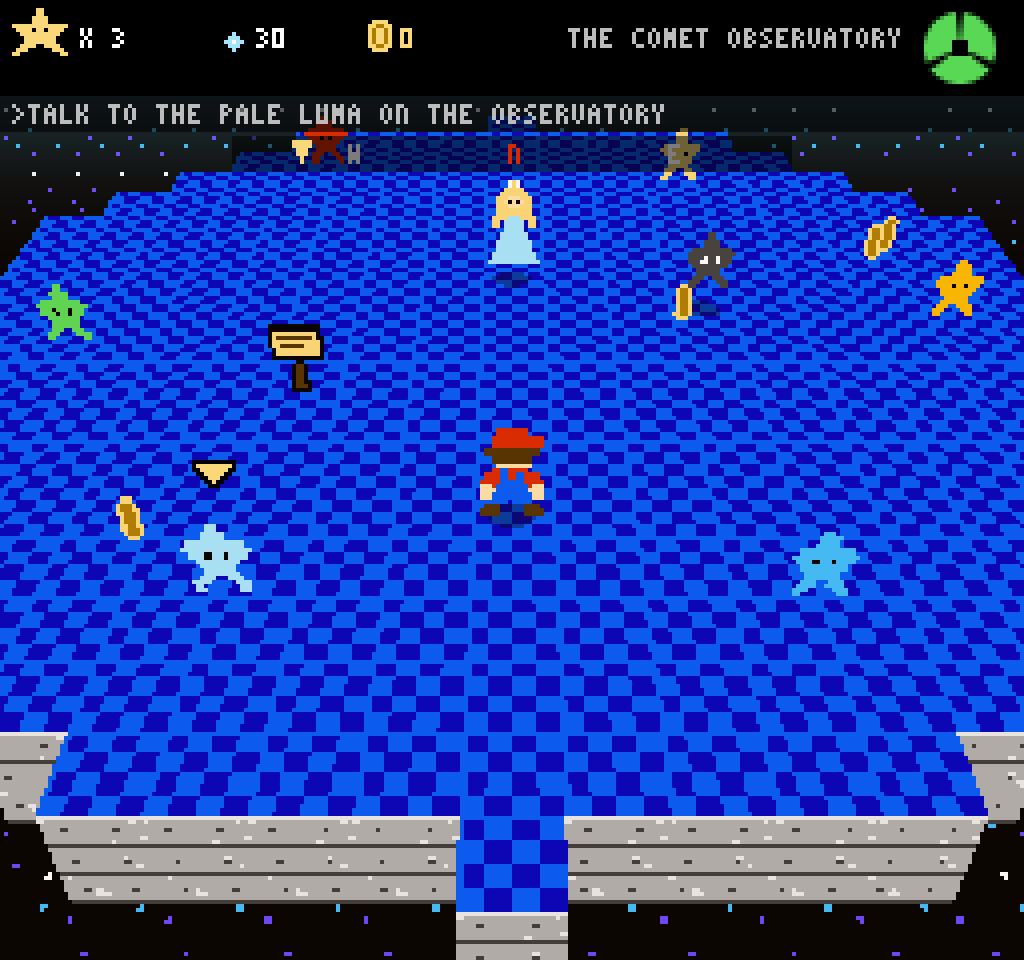
How a world is made
Each world is one folder with two files. NOTES.md is written first, in
plain words: what the original's one idea was, what stays the engine's, what is new, and
what to judge after playing — for Calibur, whether a Guard Impact can be timed by eye at
sixty ticks a second. Then world.js, a single call that describes the land,
the people and the quests. Everything else is shared, and without the world parameter
the page is still the stock game, checked against it so the original never drifts.
- worlds
- five, one per turn, over two evenings
- per world
- a notes file and one script of 400–600 lines
- shared
- the WILD 8 engine and a 340-line base
- dropped
- the first four, made up by the agent
- runs on
- a browser with a keyboard, or a Quest 3 as a diorama
Still rough
All five are marked as seeds: made, not yet judged and deepened. Galaxy is the newest and has no verdict yet. The screenshots are the flat view in a desktop browser; in the headset the same worlds sit on a table in front of you. It needs a keyboard or a Quest, no touch controls.