Untergetaucht, part two: style shopping and real places
The first post ended on an open question: the new graphics had gone online after my last reaction, so whether they answered “unpolished” was still open. They did not, quite. This is what happened in the evening and night after it, from about half past three on 11 November to half past two on 12 November.
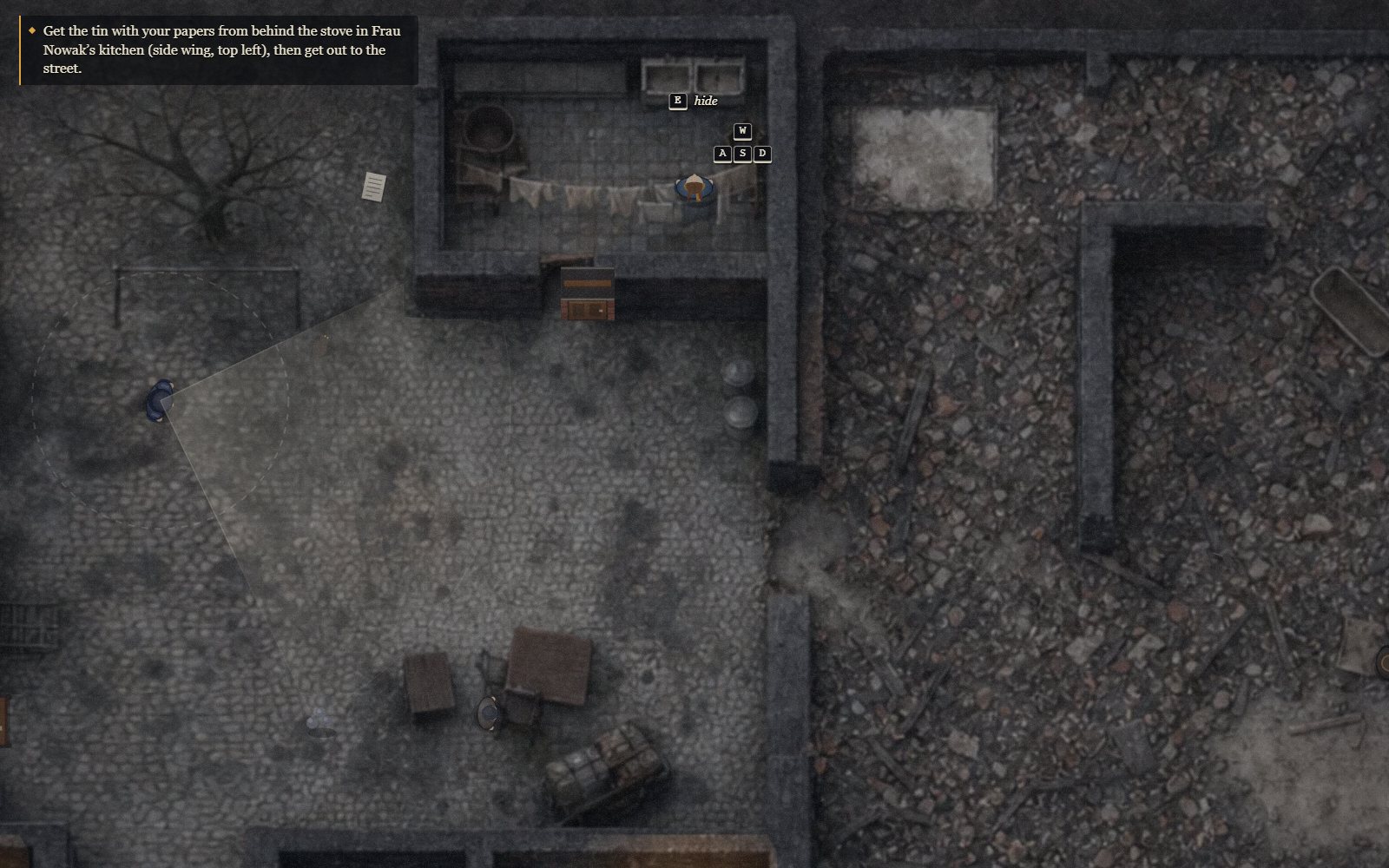
Words, voices, music, a second world
The first note of the afternoon was about the text:
can we get rid of the cryptic-poetic wording? also the text at bottom that auto transitions is worst-practice... if it's unnecessary dialogue then why have it (or you could use elevenlabs for background noise voice acting) ... but if it's relevant info it shouldn't auto-disappear
So nothing anyone has to read is on a timer any more. The goal sits in the corner for as long as it is the goal; a note at the bottom stays while what it says is true; a page of story holds the scene still until you press E. What the guards say is no longer text at all: short German barks, recorded once with ElevenLabs and placed in the stereo field over the man who said them.
Then, a little after a quarter to seven: how about we add worlds? ... then I thought
we can bring in more humanitarian disasters from history so it's not always WW2. feel free
to pick any from today or the past.
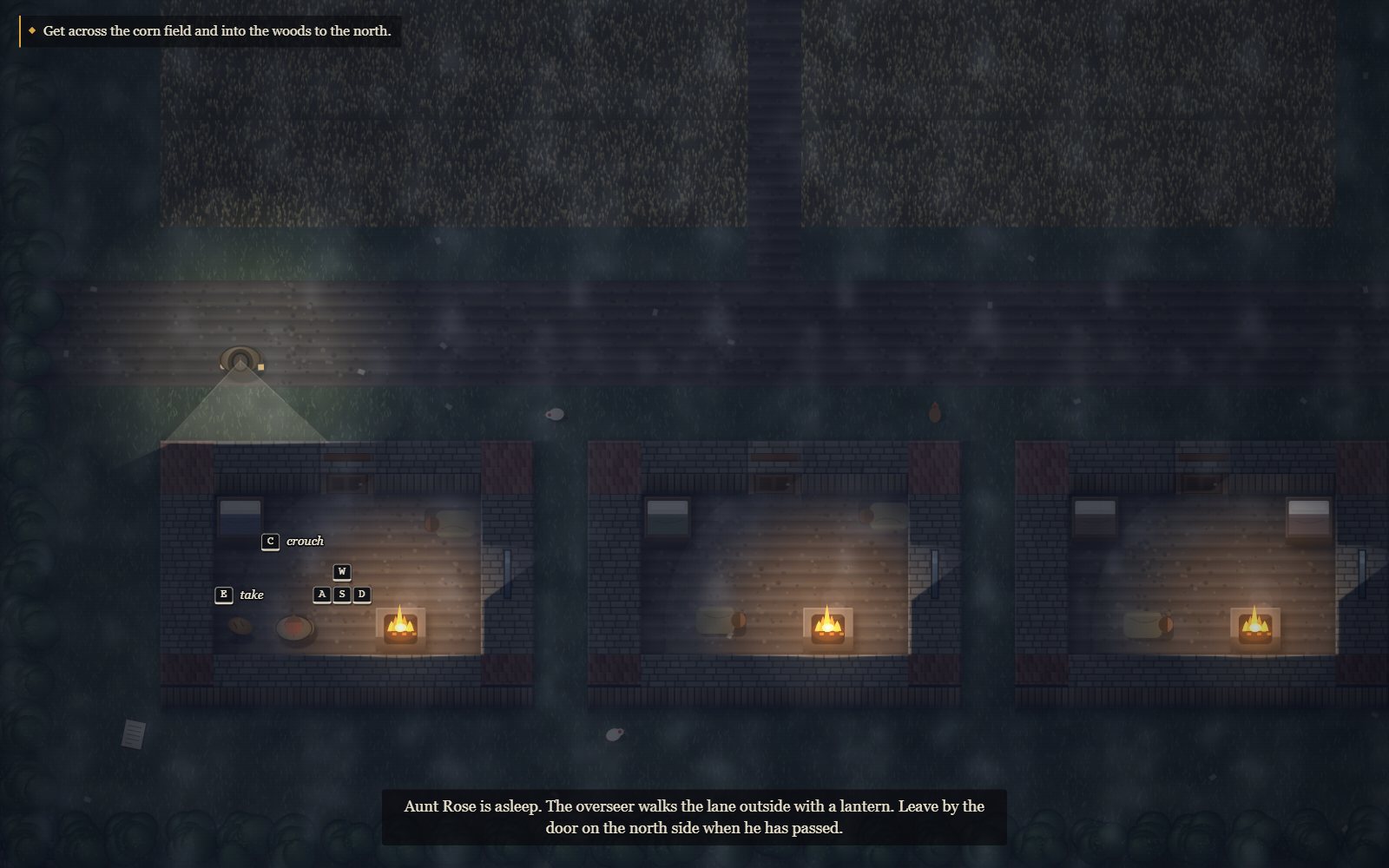
The second world is Maryland, 1856. Lucy, fourteen,
enslaved on a farm on the Eastern Shore, runs the night she learns she is to be sold
south: out of the quarters, through a marsh with a slave catcher's dogs behind her, to
Thomas Garrett's back door in Wilmington and William Still's office in Philadelphia. Four
chapters, and here the people speak English. On the title, left and right switch the
story.
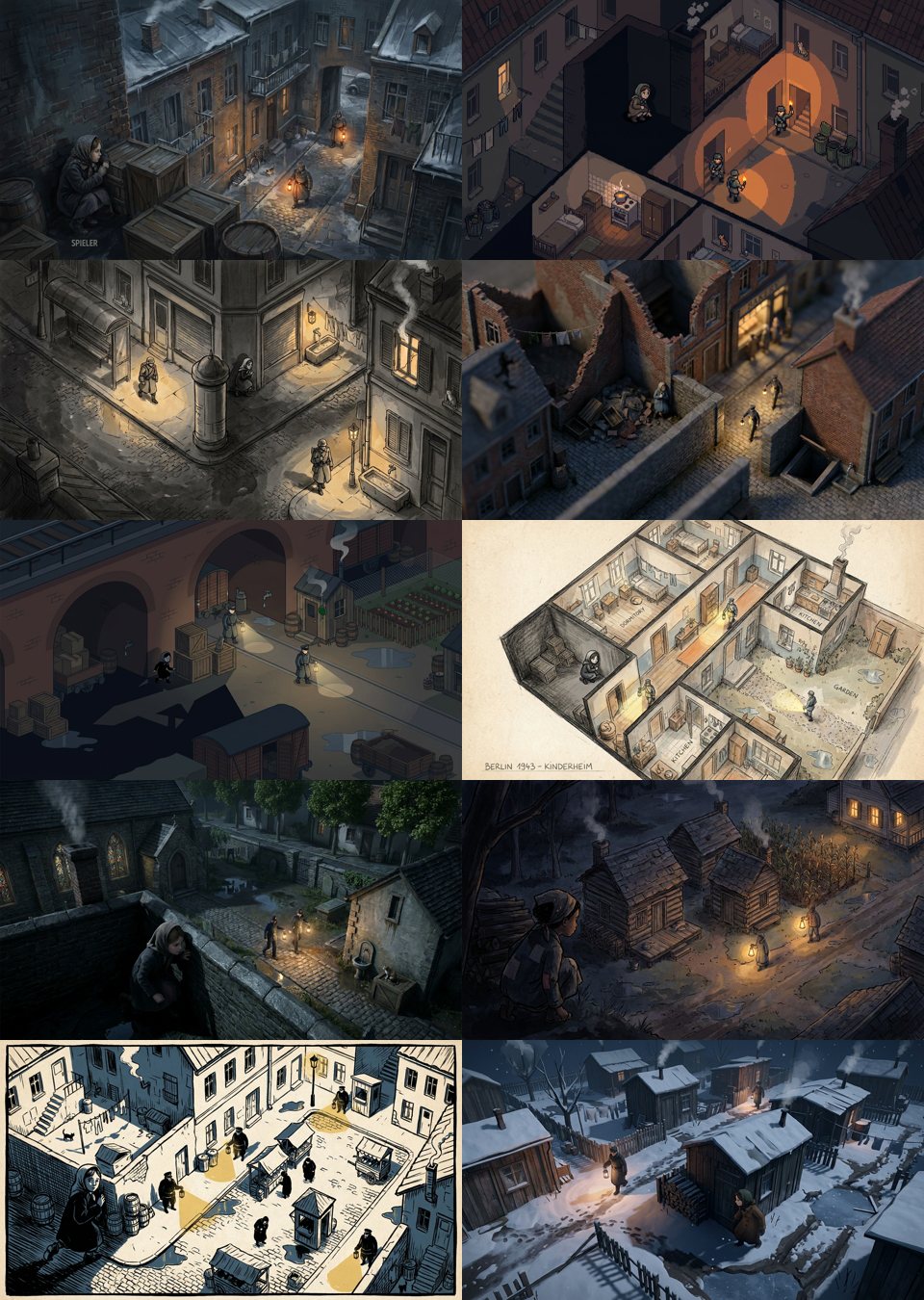
An hour later Gemini had made four lighting looks (classic, warm, noir, volumetric), and the answer to them is the longest prompt of the night:
I like the colors on volumetric. the light sources itself are overly complex looking. the fog is nice outdoors but not while inside the building or over the building. warm is good but a bit too blue. noir feels right but is too dark practically. so yeah.... take all this and unify the lighting again based on the feedback. also gymnopedie is terrible for this game... and in-game there is no music. perhaps rather go with midi and then you have the full classical catalogue anyway. let's try not to go crazy with assets and focus on gameplay again. can we make the settings a bit more believable? both blueprints of buildings and settings. I am not asking for insane assets, just making the world feel believable.... usually details help like a dripping faucet, animals, etc... smoke...
One lighting model came out of the four. The music is now public-domain MIDI from the Mutopia Project played on the game's own little synth: Chopin preludes, Bach chorale preludes and Mendelssohn in Berlin; Stephen Foster, spirituals and Dvořák in 1856. Cats, rats, hens, dripping water and chimney smoke came in the same deploy.
Style shopping
Just after nine:
the game is great and the voices are cherry on top.... however the level design and world design have some things left to be desired... I think the quickest way for us to solve this is for you to use nano banana to create about 10 renderings of different visual styles... no need to give it any layout or so, just topdown stealth game set int 1940s Berlin or whatever else you think it needs... max cost 2$
Which was the next note: none of the renderings show topdown ... what helps I found
is if you DO actually give it a sample level layout to stick to. when I first played it
felt like commandos so that's a good point to work with
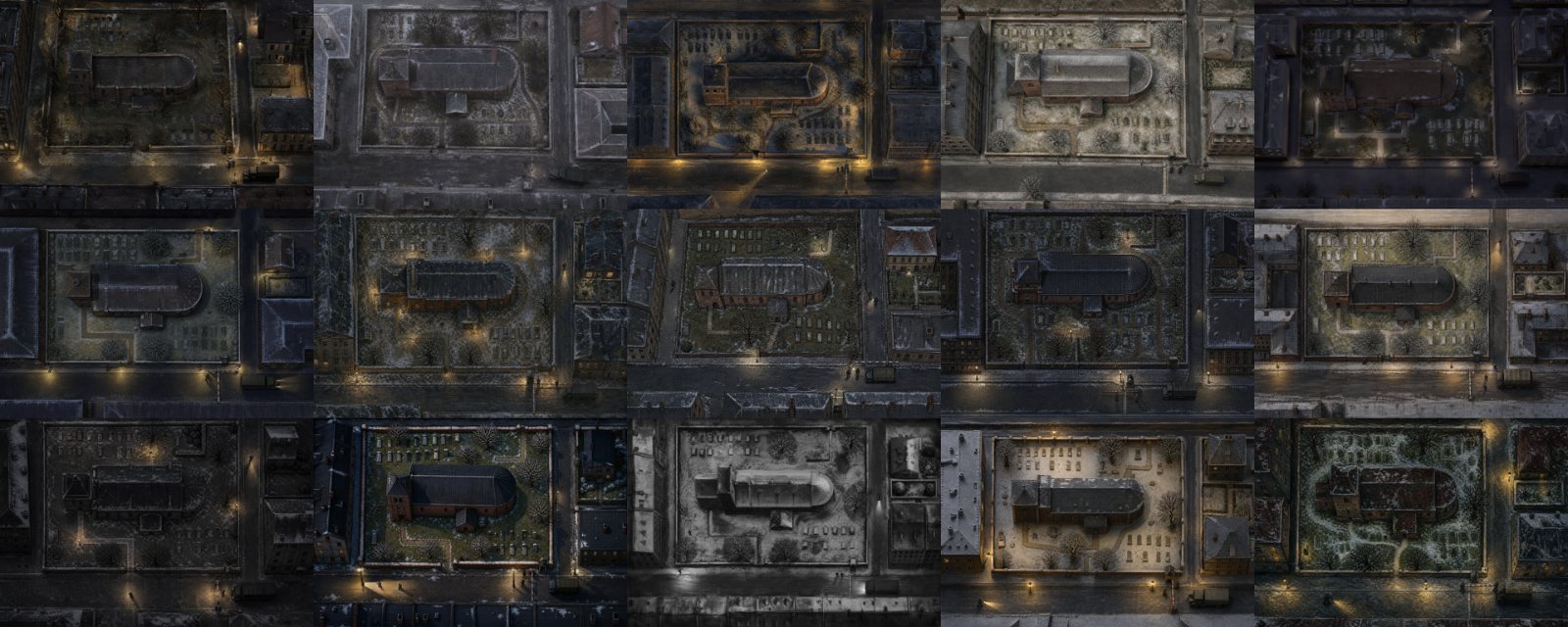
. The next round went to
OpenAI's image model, one church laid out as a level and rendered in many looks, and the brief narrowed to
realistic 3D is actually nice as long as it stays topdown (for now) and that also
gives us that commandos look ... this is about style shopping, so no need to render
multiple levels
.
The pick, at a quarter to ten: yeah lets just go with the commandos style realistic
3D
, and five minutes later, after a detour through cartoon touches, never mind
let's just stick with ralistic 3D forget about the stylized stuff.... on levels where the
render keeps messing up we could also retrofit the level to the rendering
.
A backdrop from the game's own block-out
The way it works now: the game draws its own map as flat coloured blocks (walls,
floors, furniture, doors, from the same data it plays on), the image model renders that
from straight above with the roof cut away and evenly lit, and the picture is cropped back
onto the map. A fit check lays the walls over the rendering in magenta, so you can see
where the picture strayed from the plan. Walls, sight lines and hiding places stay the
map's own invisible data. Doors are left out of the rendering:
the doors are also bad to have pre-rendered... so probably everything that visually
changes state should not be rendered or cut out after or overdrawn by the dynamic
graphic
.
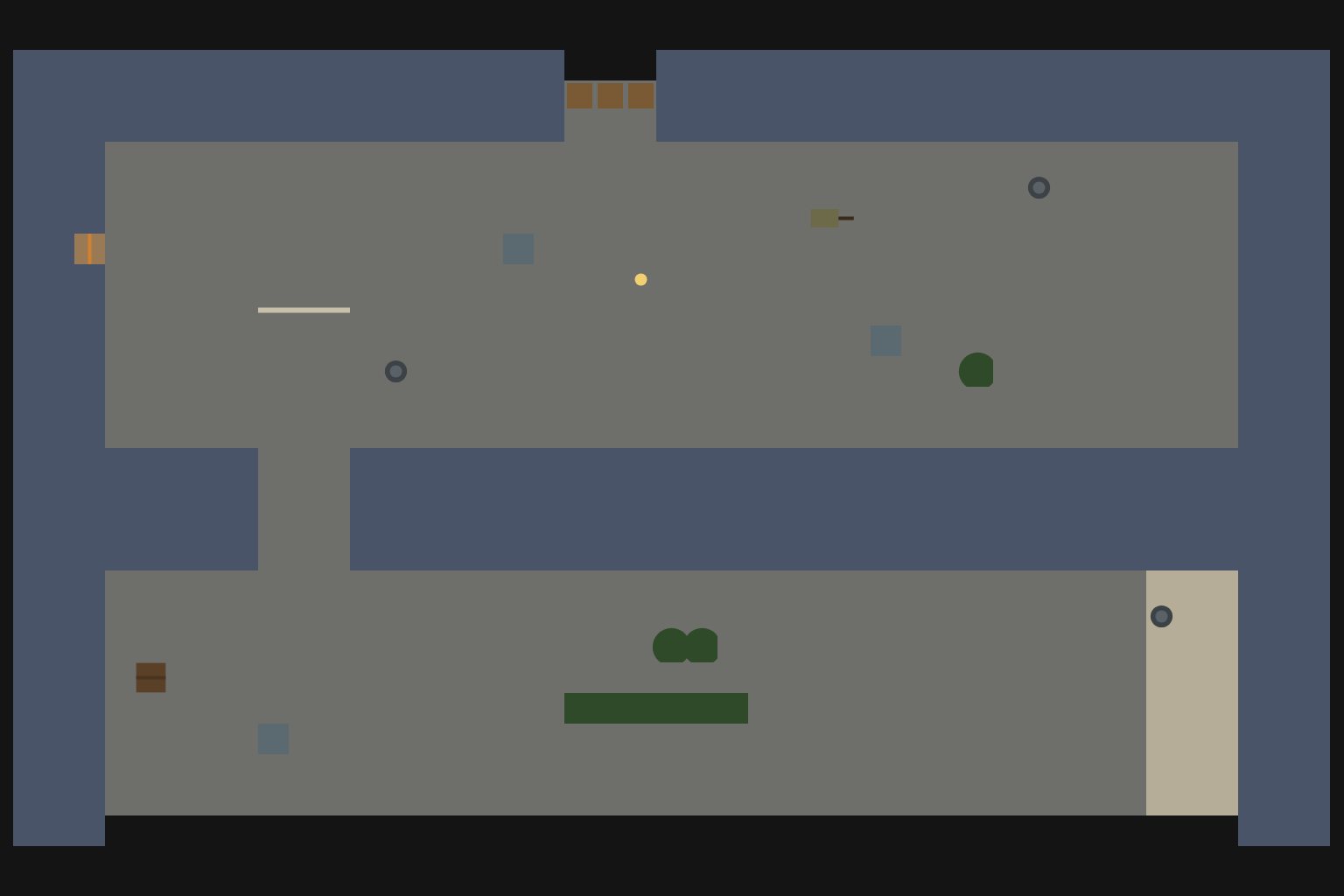
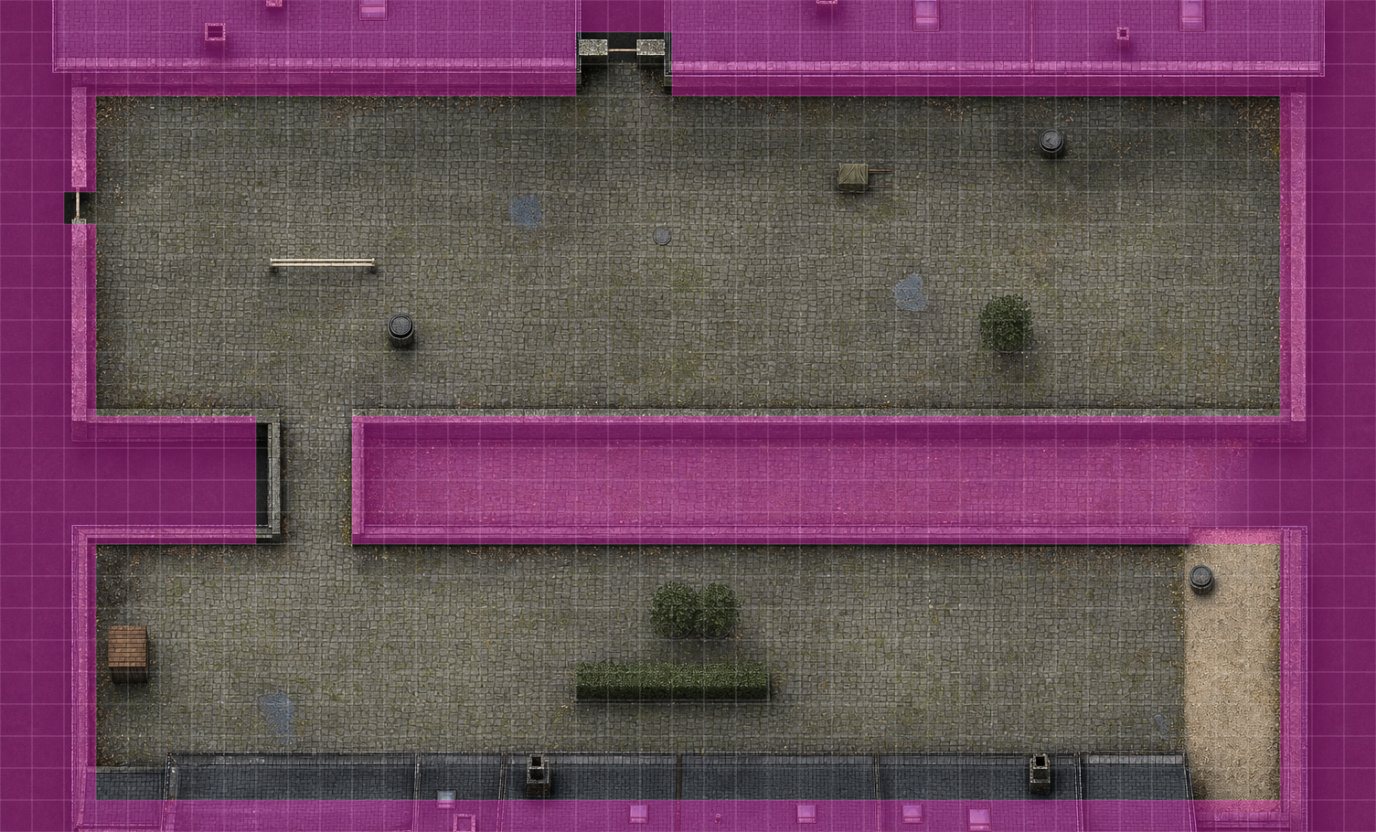
Three chapters have a rendered backdrop now: the children's home, the back yard and
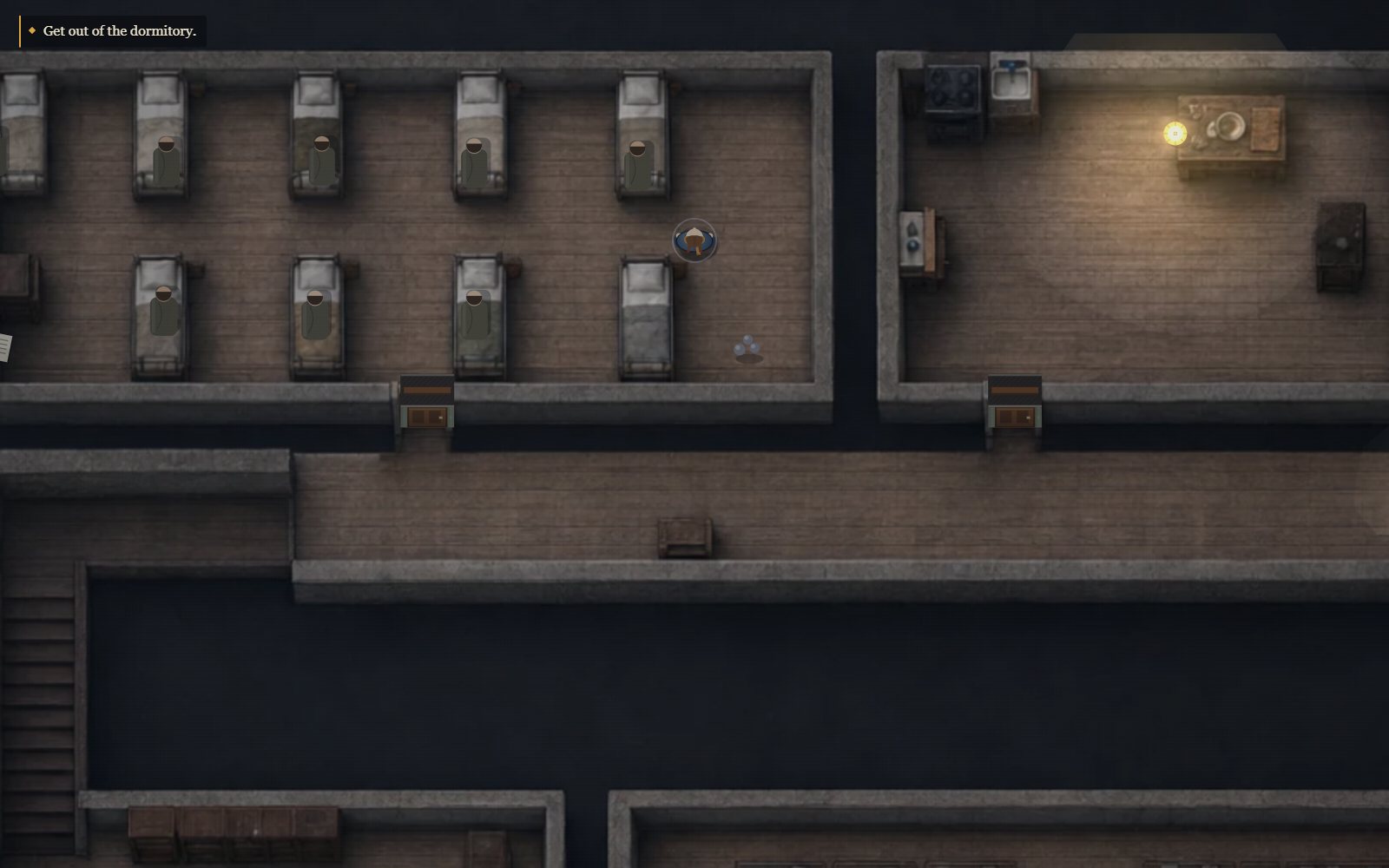
Bombed Out. The first one came back with a note: the Kinderheim is incredibly dark btw
not sure what you rendered or if you apply light effects on top of the rendering (which of
course makes 0 sense)
. It was lightened that night.
Not levels, places
Shortly after midnight the request changed from the look to the layout: instead of
designing a “level” perhaps you can focus on creating a believable location
(think room sizes, furniture placement, etc.. ruins, ...) and just kind of lay it out as
black and white blocking for the image AI
. Bombed Out is the one chapter built that
way and put online: a side wing with Frau Nowak's kitchen, a yard of fourteen by fourteen
metres, a burned-out front building, the house next door fallen into its cellar, and a
street with a fire engine and a field kitchen.
The rest got a review, chapter by chapter. Part of it:
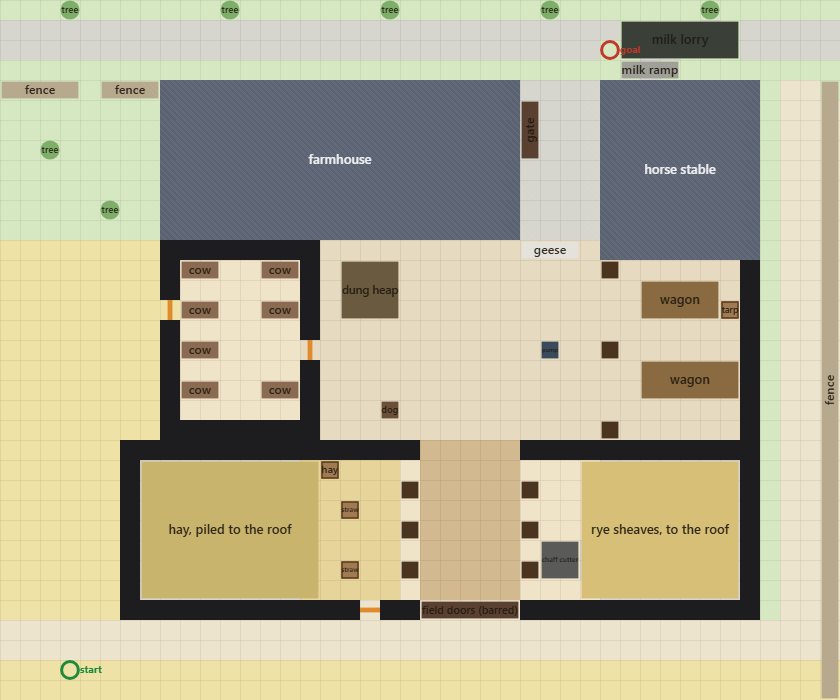
level 1 is ok, let's leave it. level 2 is acceptable. level 3 is mechanic wise strong but if you were to tell me how big the rooms are and where things are placed you would quickly see its not believable as an apartment or any type of normal building. level 4 the streets ok but wtf is the rest. lvl 5 same idea, what about this is supposed to be a market. ... if level 13 is supposed to be anhalter bahnhof then why not have it look like it. lvl 14 is that what a barn looks like? not believable. ... look if we have all these real places it should be real easy for you to deduct believable level blueprints right?
Four agents redrew thirteen chapters at one tile to the metre. The next look at them
found the same fault one level up: why would lvl 3 be so big if the optimal path is
only in a tiny section? ... if the buildings dont matter then dont give them interiors ...
perhaps we should first build some level blueprints and put the missions on top of them
this one time, cause it seems that the other way around is too confusing
.
So it is blueprint first now. A blueprint is one real place with nothing of the mission on it: every object is a block with its word written on it, every building Hanna never enters is a labelled roof, and the map is only as big as the play needs, with two or three ways from start to goal. Fourteen were drawn by half past two that night.
- built
- Claude Code, 11 November from mid-afternoon to 12 November about 02:30; part one was 11 November
- chapters
- 16 in Berlin, February 1943 to May 1945; 4 in Maryland, Delaware and Pennsylvania, 1856
- pictures
- three chapters on a rendered backdrop (OpenAI's gpt-image-2), the rest drawn in code; style shopping and backdrops cost about $6 in image calls that day, 39 to OpenAI and 34 to Gemini
- sound
- guards' barks voiced with ElevenLabs; public-domain MIDI from the Mutopia Project on the game's own synth
- made with
- plain JavaScript on a canvas, about 8,000 lines live, no build step
Still rough
This one stops in the middle. The fourteen blueprints are waiting for my review on the
laptop; until they pass, the live game keeps its old maps for everything but the three
rendered chapters, and most of those old maps are the ones the review above called not believable.
Then the missions go on top and each place gets its rendering. The redraw also caught a
mistake in the history: Anhalter Bahnhof only had trains to the south, so the farm Hanna
takes a train to cannot be near Oranienburg, and in the redrawn version it moves to the
Anhalt line near Luckenwalde. The 1856 world is still in the drawn look, and of its four
chapters the review called two believable-ish, one super weird
and one nope
.
Thomas Garrett and William Still are real people; the history in both worlds was written
by an agent, not checked by a historian.