An app from one sentence, so far
This one is not finished, and I am posting it anyway, because it is a passion project and the middle is more interesting than the end will be.
Every small tool I have ever made for myself — a gym log, a to-do list, a line to read every morning — was built the same way: a page you can type into, somewhere to keep what you typed, a hand-drawn icon, and a pile of boilerplate to make a phone treat it like an app. That is an evening of work around the twenty lines that matter, and it only happens at a desk. The need never turns up at a desk. It turns up in a kitchen.
an idea I had a while ago that still holds up well. the lovable of PWAs: Zettel: a plattform to create little PWAs for anyone
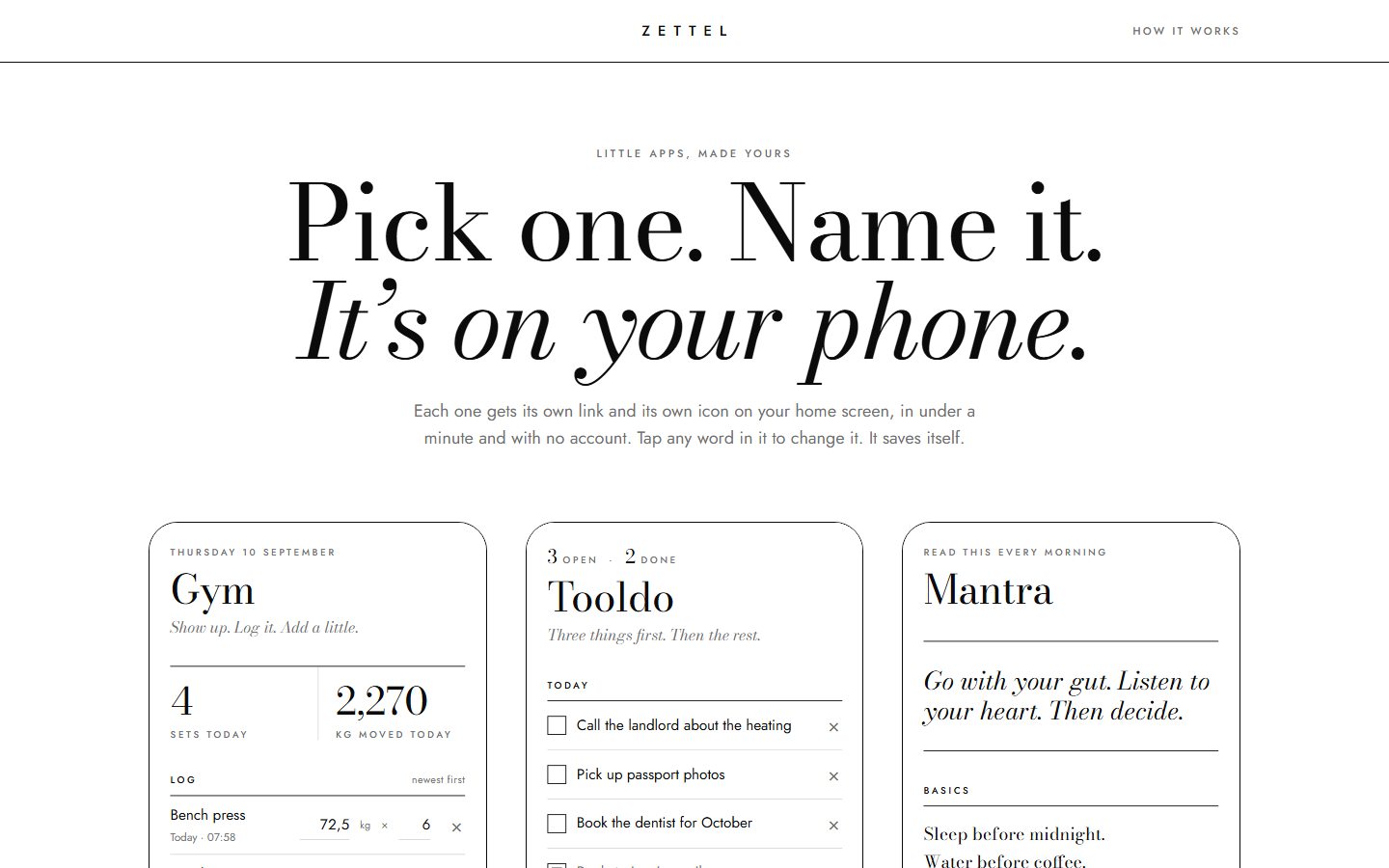
What happens when you use it
You open it on your phone and it asks what you need. You type a line — a water tracker with a two-litre goal — and watch the page being written, with the cost ticking up in front of you. Half a minute later you are looking at the app itself, not a description of it. Say what should change, or keep it: give it a name, pick an icon from about 1,800, choose black on white or white on black, and press Make.
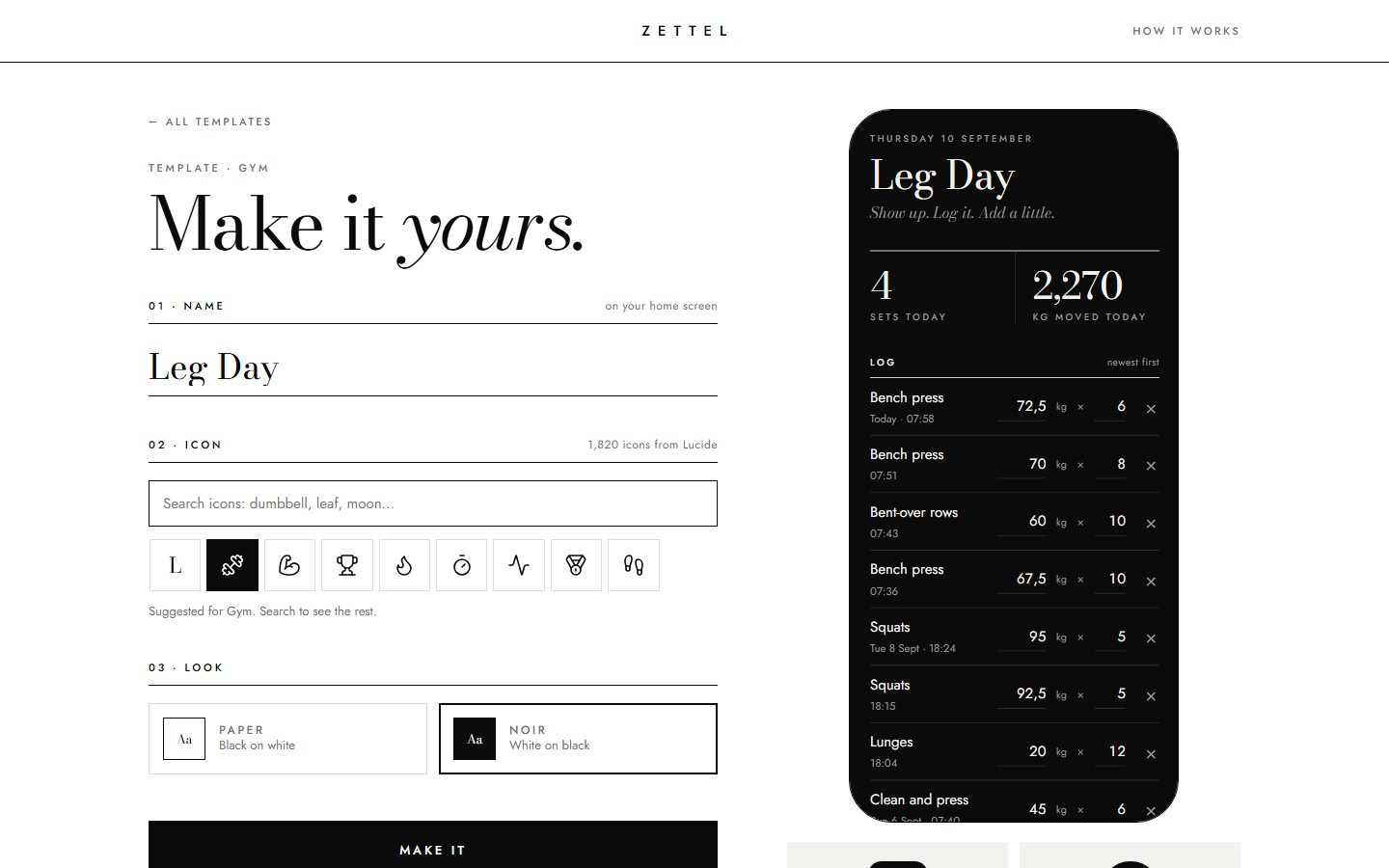
What you get is its own address, its own icon on your home screen, and its own little document where your entries live. Every heading and label in it can be edited by tapping it. Open the same link on a laptop and it is the same page — the link is the key, and there is no account for the apps you make.
The trick that keeps it cheap
The tools that write software for you write a whole codebase, which you then have to host and babysit. Zettel only ever writes one file, against a small kit that already handles saving, syncing and how things look. So the model spends its attention on your idea instead of on plumbing, the result is the size of an email, and the house style stays the house style no matter what you asked for.
Twelve ideas, two to nine cents each
To find out whether that holds, I ran twelve one-line ideas through it, start to finish, and kept the receipts.
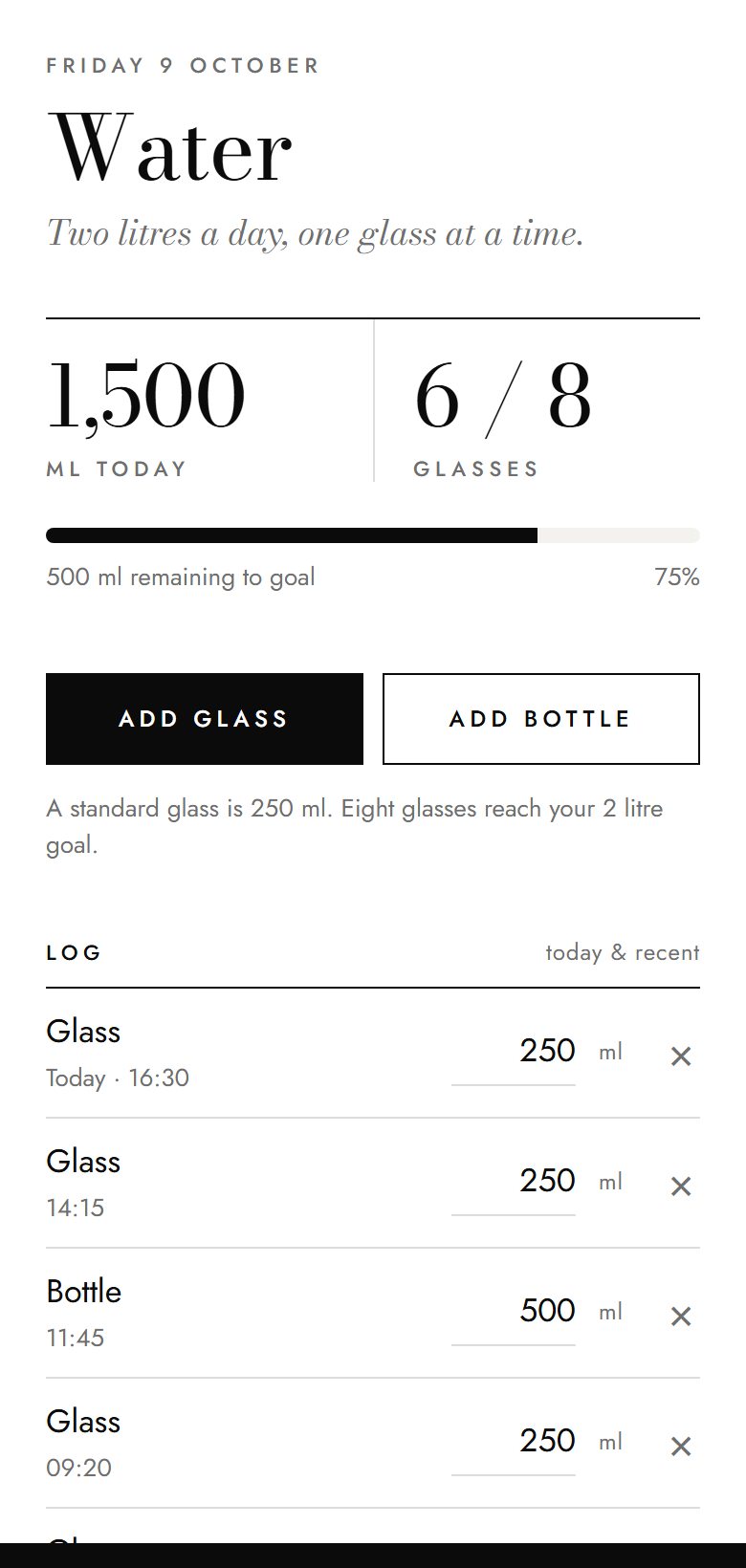
A water tracker with a 2 litre daily goal and a tap for every glass.Six cents, a minute and a half.
- ideas tried
- 12 — water, packing, reading, plants, pills, expenses, mood, stretches, groceries, baby feeds, sleep, commute
- made it to a working app
- all 12
- cost each
- $0.018 to $0.091
- time each
- 25 seconds to about two and a half minutes
- size
- 5 to 12 KB a page
All twelve worked, which is not the same as all twelve being right. The run also records what each one got wrong, and those notes are the useful part: one page shipped sixteen tick-boxes too small for a thumb. One ignored the kit's date helper and wrote its own arithmetic, which is exactly the kind of thing that is correct until the clocks change. One decorated itself with a tick-mark character that the house style forbids. None of these are failures you would catch by glancing at a screenshot.
Why it is not done
Because the generating half costs me money every time anyone uses it, so right now it sits behind a single account — mine — and strangers get the sixteen ready-made templates instead. Twice the work simply stopped because the spending cap on the model had been reached. Making that safe for other people — who pays, how much, what happens at the limit — is the actual product, and it is the part still missing.
Also unfinished: the pages it writes are only as good as the kit's rules are strict, and each of those twelve findings is a rule that does not exist yet.
So this is a note from the middle. The shelf is real and you can take something from it today. The sentence-to-app part works, on my phone, for me. I will write the second half when it works for you.