A gate too big for people
Porte is one of the forty-odd worlds in the VR lab. It started with a promise at the end of a long brief on the evening of the 20th:
I also want you as Opus to try your hand at creating great ruins like in vale but your own take on it... I might later feed you some images to recreate.... my favorite combo is always some vast nature around and then a grand ruin or palace seemingly reaching out of nowhere ... this contrast of vast nature vs epic manmade
Just before one in the morning I fed it the first image: a concept painting by Quentin Mabille called Porte, a gate cut into the walls of a canyon with the light coming through it. The whole prompt was one line:
try to recreate this world / ruin / landscape in webVR
Thirty-two minutes later the scene was done. The painting is not reproduced here; it is on the artist's page. What follows is the scene, which is built after it and copies no pixel of it.
What it is
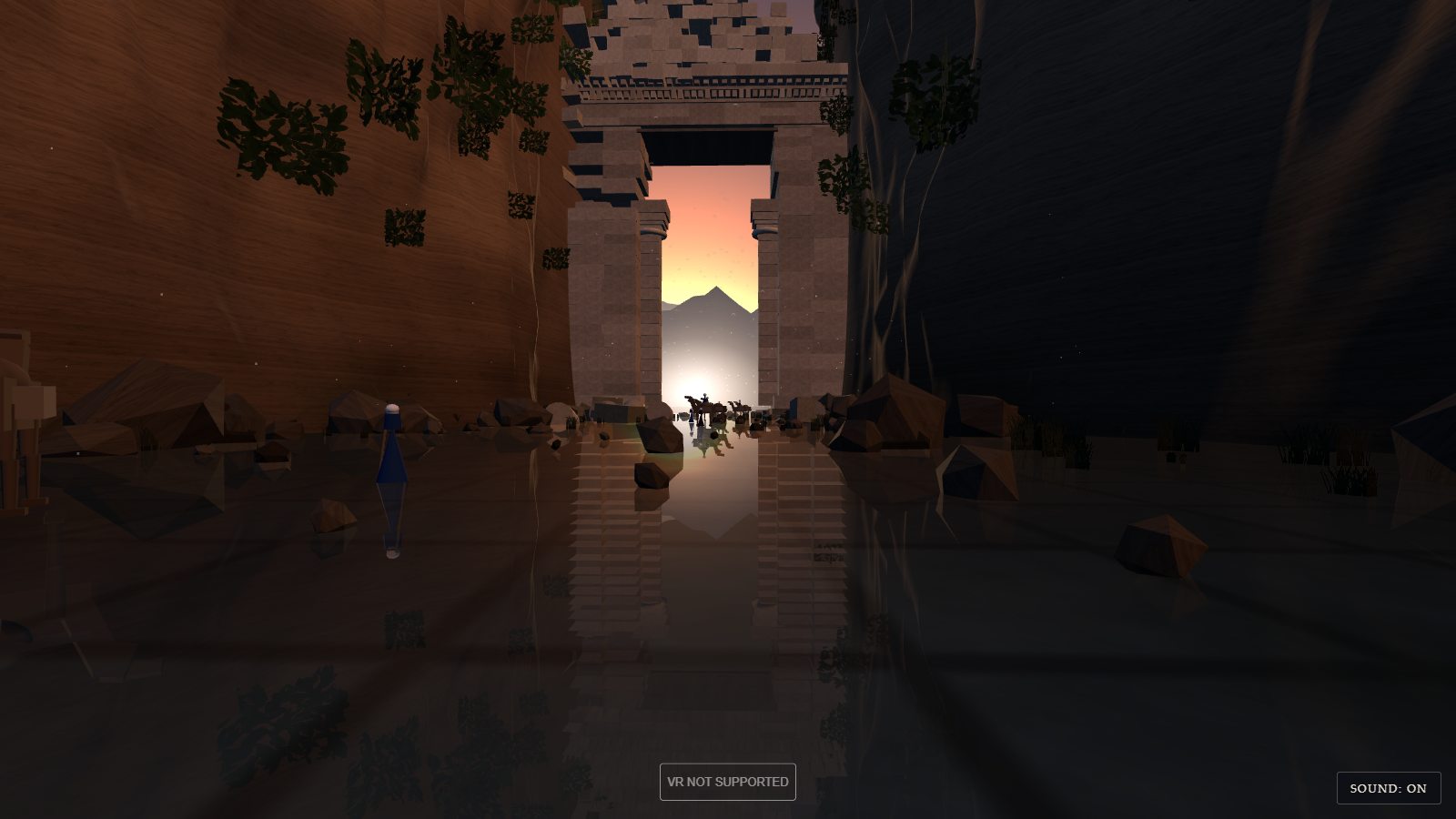
You stand in a gorge with a hand's depth of still water across the floor. Ahead of you, set into both walls, is a gate: 23 metres wide, 50 to the underside of the lintel, with a ruined upper storey leaning into the rock above that. The sun is setting on the far side. A caravan of seven camels and three people on foot is wading towards it. You walk after them, under the lintel, and out into the warm country on the other side. There is no goal, no timer and nothing that can hurt you.
Three decisions do nearly all the work, and the build notes name all three. The key light sits behind the gate, so everything facing you is in cool shade and only the rim of the stone catches the sun. The water is a mirror, so the whole ruin exists twice, once in stone and once upside down under your feet. And the caravan is the scale: without something your own size in the frame, a fifty-metre door reads as a normal one.
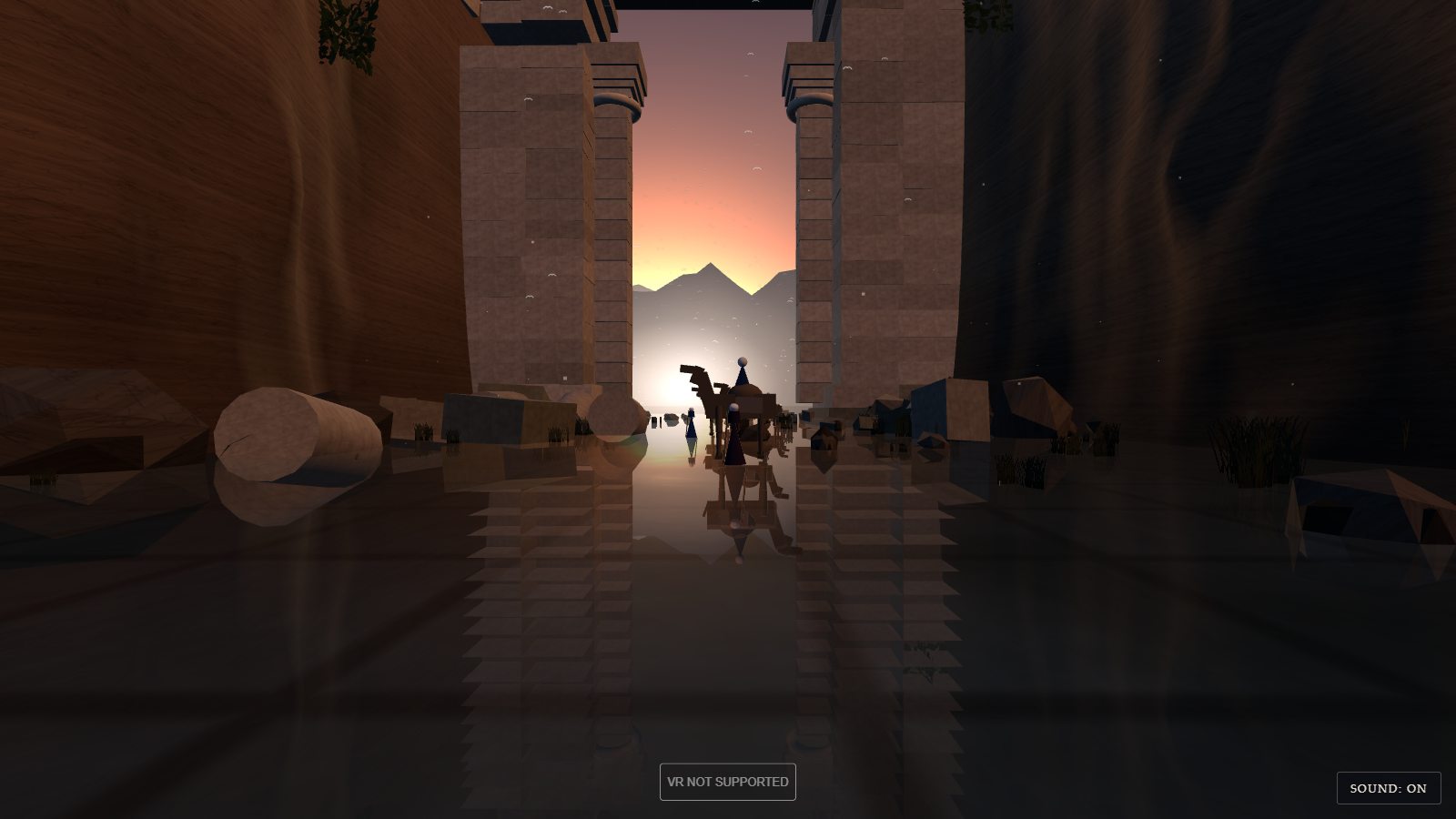
The gate is not one shape. It is roughly 520 stone blocks, each placed in code: a
plinth, courses six blocks high, columns with capitals, a three-course architrave, a carved
band, a cornice sheared off on the left. That way of building, textured block courses
instead of smooth shapes, became the house method for the worlds after it. In the lab's
handover notes it is literally called Porte-style building
, item three of the
recipe.
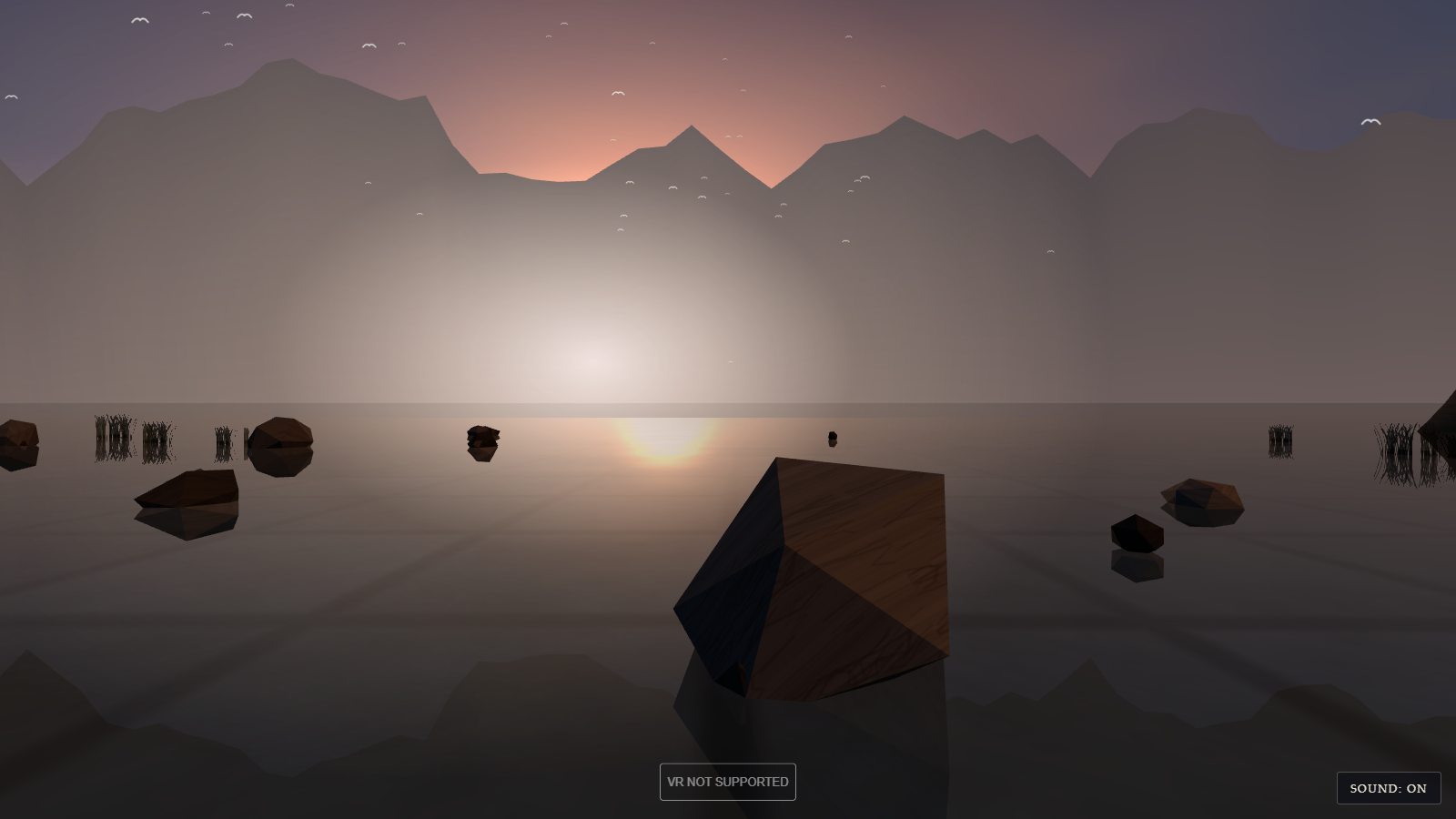
There is a soundtrack, and none of it is a sound file: gorge wind, water, gulls, a camel bell and a low drone are all synthesised in the page. Five short lines of text appear as you walk, one of them under the lintel:
Under the lintel. Forty metres of cut stone, holding still, directly above you.
The verdict
Forty-five minutes later it was reviewed in a batch with four other worlds. Two of them got a paragraph of complaints each. Porte got one line:
Porte: nicely consumed, beautiful, let's not change it.
Two and a half hours after that, back in the window where it was built, I sent the next
painting with amazing! now do this one
. The next day, explaining what was wrong with
a new world called Pharos, Porte had become the yardstick:
If you look at Vale or Porte, these are miles away...
The art has not been touched since. The handover notes list it as done, leave
.
- page
- one HTML file, 70 KB, three.js 0.172 from a CDN, every shape built in code, no models
- gate
- 23 m opening, 50 m to the lintel, 13 m deep, about 520 blocks
- cost
- 34 draw calls and 118k triangles, measured when it was built
- controls
- WASD and mouse; in a headset left stick walks, right stick turns; on a phone a stick and drag to look
Later
On 16 October the overnight agents gave Porte a folder of its own, separate from the
lab. They added a walk test that steps through the gorge in 15 cm steps along four routes
without a browser, checking that no boulder traps you, and a deploy that refuses to
overwrite the page if it was changed somewhere else. They also added touch controls for a
phone, and an ending: past the gate the title card comes back once, says
THROUGH
, and offers Walk again or Stay. The art stayed untouched, as the notes
say it should.
Still rough
The title card says the door is forty metres tall. The code builds it fifty to the underside of the lintel and seventy-six to the top of what is left.
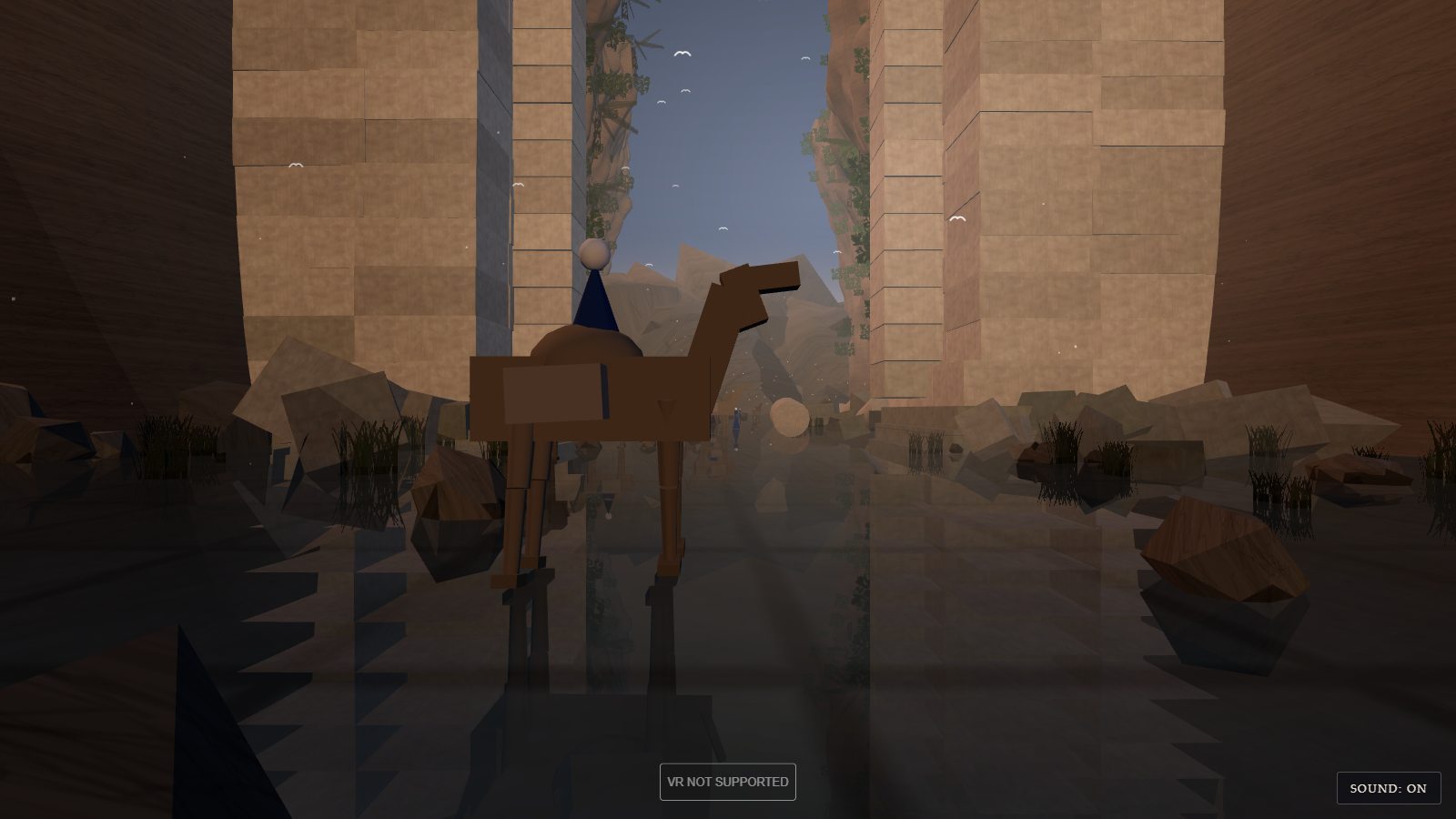
The camels are made of boxes. From the start position you see silhouettes against the sun, which is the point, but walk up to one and it is a cardboard toy.
On a desktop screen the Enter VR button sits on top of the credit line at the bottom of the title card, so the line that names the painter is half covered.
The phone controls were only ever checked in an emulated phone in a headless browser, which ran the scene at 2.5 frames a second. How they feel on a real phone is not known.