Open Anatomy, the hip new anatomy book
Open Anatomy was going to be an anatomy atlas that belongs to everyone. Take the old public-domain plates, put pins on the structures, and let anyone fix a pin or add one, the way anyone can fix a Wikipedia article or a street on OpenStreetMap. The first note about it, from March 2017, is a data model under the heading "abstract fucking anatomy thing app": a body part has images, an image has areas, an area has a pin and an excerpt.
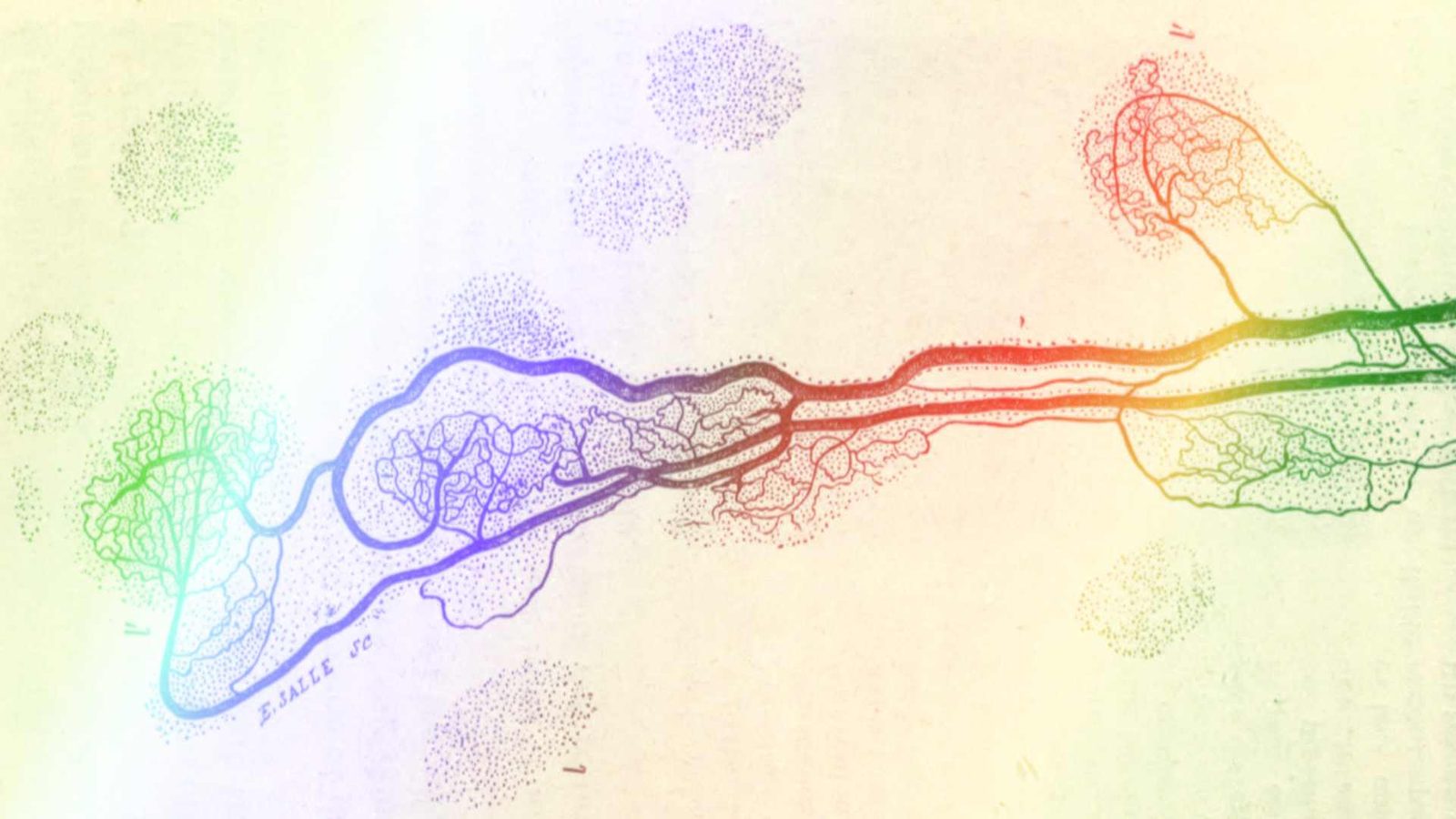
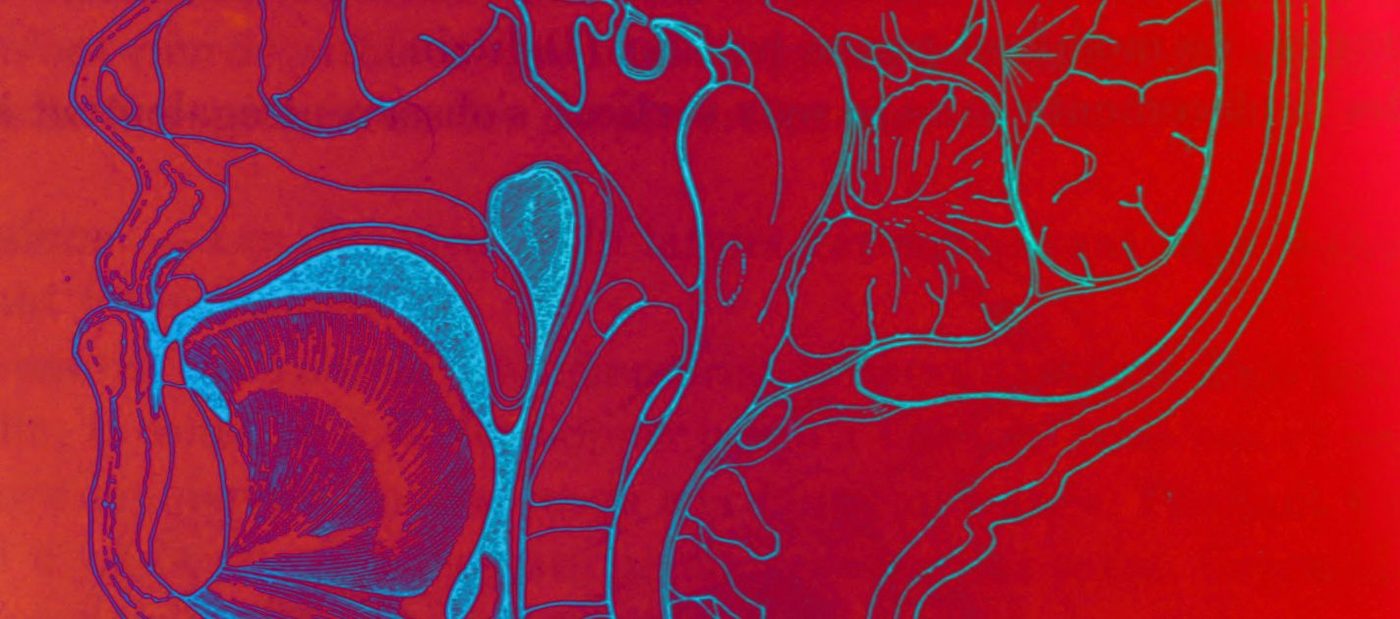
On this day the idea got its first material. Six plates from Poirier and Charpy's Traité d'anatomie humaine, in the University of Toronto scan on the Internet Archive, cropped and recoloured in GIMP, and a WordPress site on localhost to put them in. The site never got past the default theme. Its one page of real content says:
this is where you can select any image to learn with
Wikipedia, OpenStreetMap, Open Anatomy
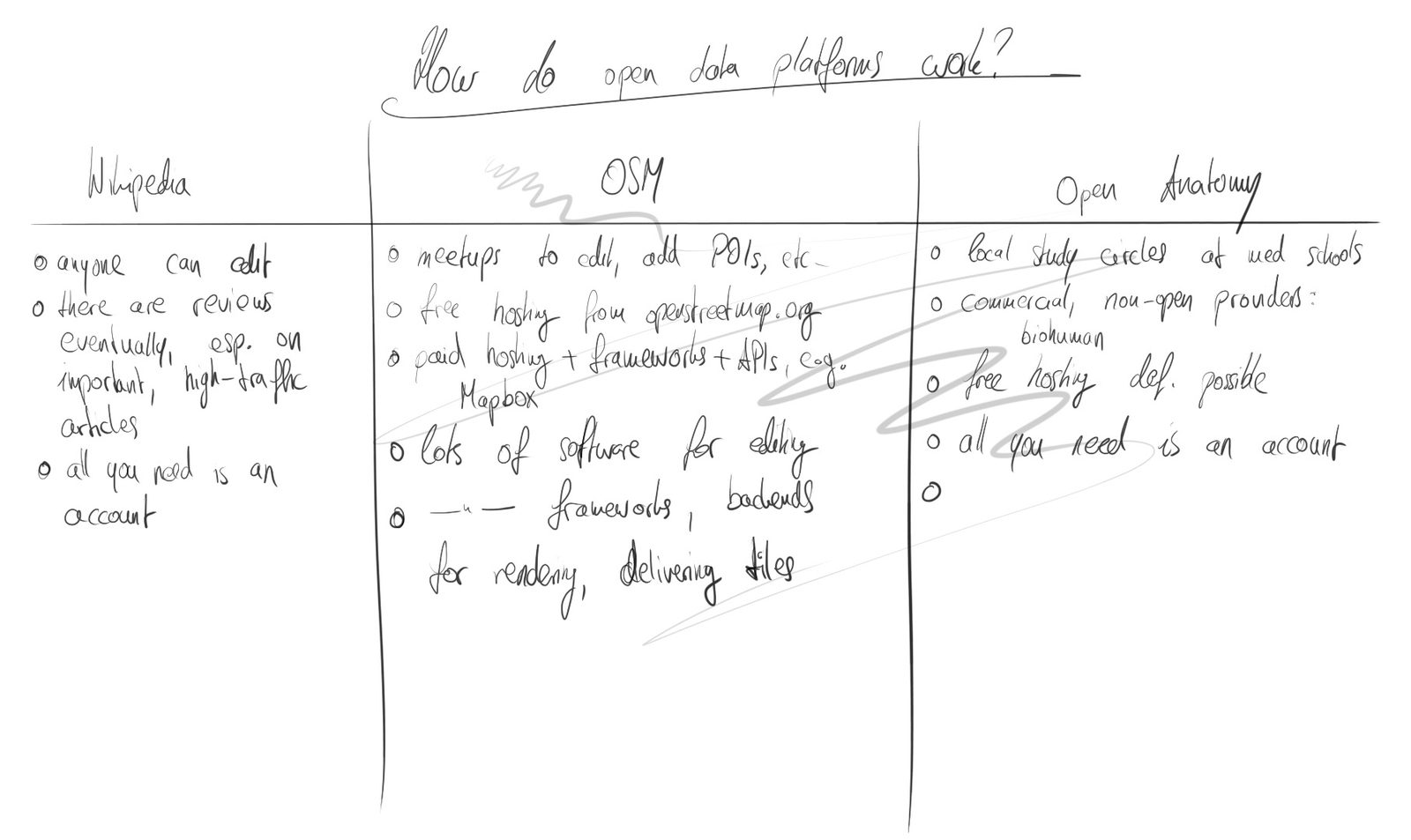
The idea came back in August 2019 as a set of diagrams. One puts the three side by side on a line: Wikipedia, then OpenStreetMap, then Open Anatomy, with "higher complexity" pointing one way and "bigger target audience" pointing the other. Next to the users it says "even smaller group than OSM with even higher dev cost". The same sheet plans a "Sobotta app" and an "Unreal VR editor/viewer".
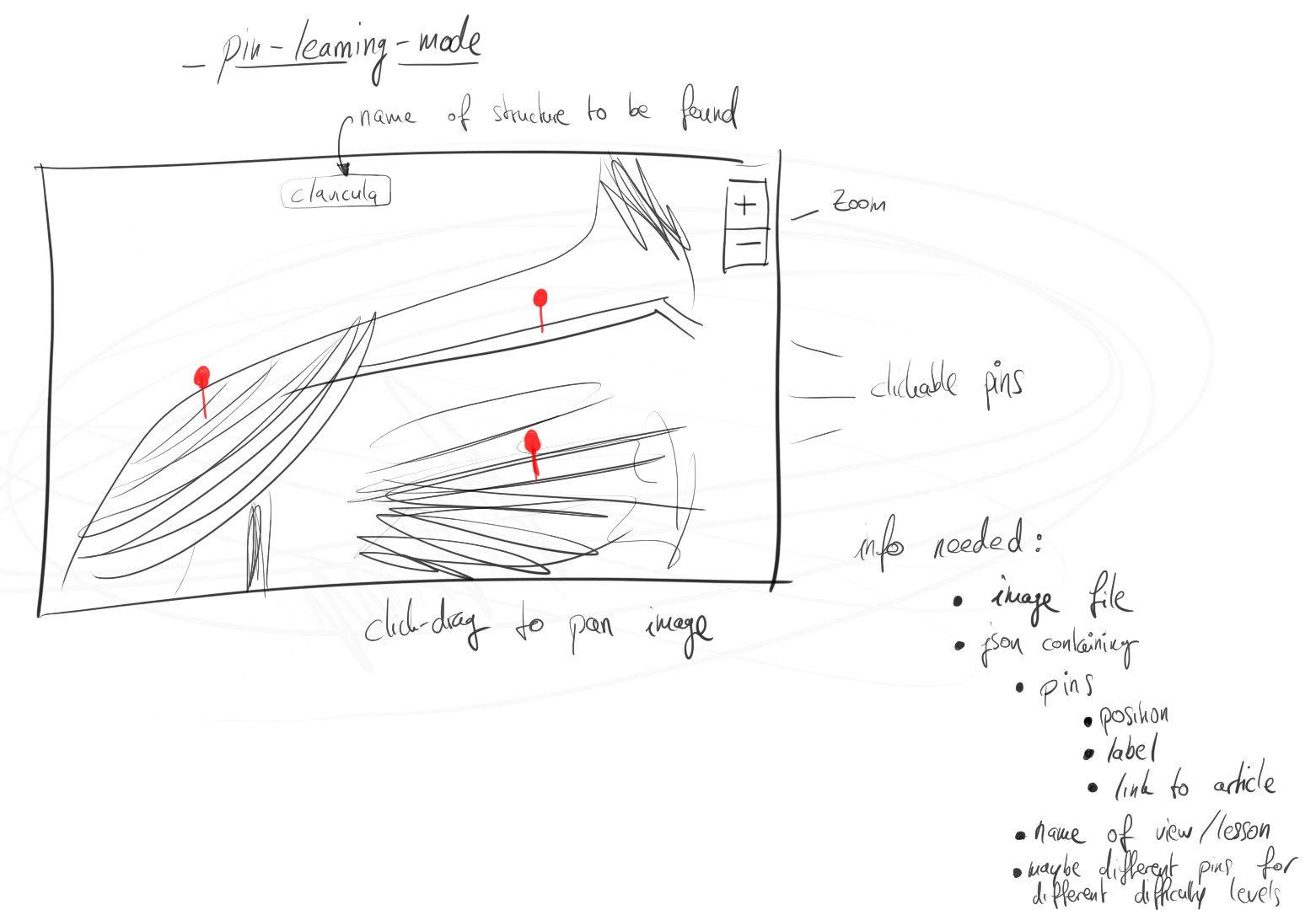
Two of the sketches are the app itself. In the learning mode you get the name of a structure, "clavicula", and have to find its pin on the plate. In the edit view the pins can be dragged, and a side pane takes the label, a link to an article, tags and synonyms.
Why 2D
Three months later, in November 2019, four more pages of notes. They start with the smallest version that could work:
Let's say we have Gray's anatomy. So maybe 500 pictures. If I could label like 5 of them and put them online as a proof of concept.
Then money, "I really need 'less' money in the sense of no VC or sth. Enough to live is fine. Like Jimmy Wales said.", and the interface: "But UI isn't important, getting it out there is." One page argues with itself:
"But Patrick, aren't there already better, 3D solutions?"
Well, yes and no. There also were encyclopedias before Wikipedia. […]
But Wikipedia is free and open.It's also funny that everyone's trying to "solve" 3D and get fame instead of just creating a highly usable 2D version.
The last round of notes is from February 2021. The target group is "med students, low income but not only", the product is "the hip, new anatomy book", and the brief for the look is "Make old look new and cool and fresh". The list of things it should not be has two lines: "extensive 3d-model" and "connection to commercial books, linking to sales bullshit". Companies were welcome to build on the data, "like mapbox does it for open street maps", and the notes take the comparison further than they need to:
Open street maps has a similar problem. Which satellite images to use? […] What happens when continental plates move?
- plates
- six from Poirier and Charpy, volume 4, with their GIMP files, 23 April 2017
- site
- a WordPress export from localhost, same day, default theme
- sketches
- six diagrams from 20 August 2019, four pages of notes from 27 November 2019
- notes
- a data model (March 2017), a design doc with an API sketch (September 2019), a feature list (February 2021)
- code
- pseudo-code in the notes; the function that was going to draw a pin is empty
Still rough
None of it became an app. The proof of concept, five labelled plates online, did not
happen in those four years. The 2017 data model ends with
void displaySinglePin (Canvas, x, y) {}, and that is as close as a pin got
to the screen.
In October 2026 an overnight agent run took the six plates out of the folder, turned their printed labels into data and built a small viewer around them, with the learning mode from the sketch as a quiz, plus seven plates from the 1918 edition of Gray's. That one can be opened.